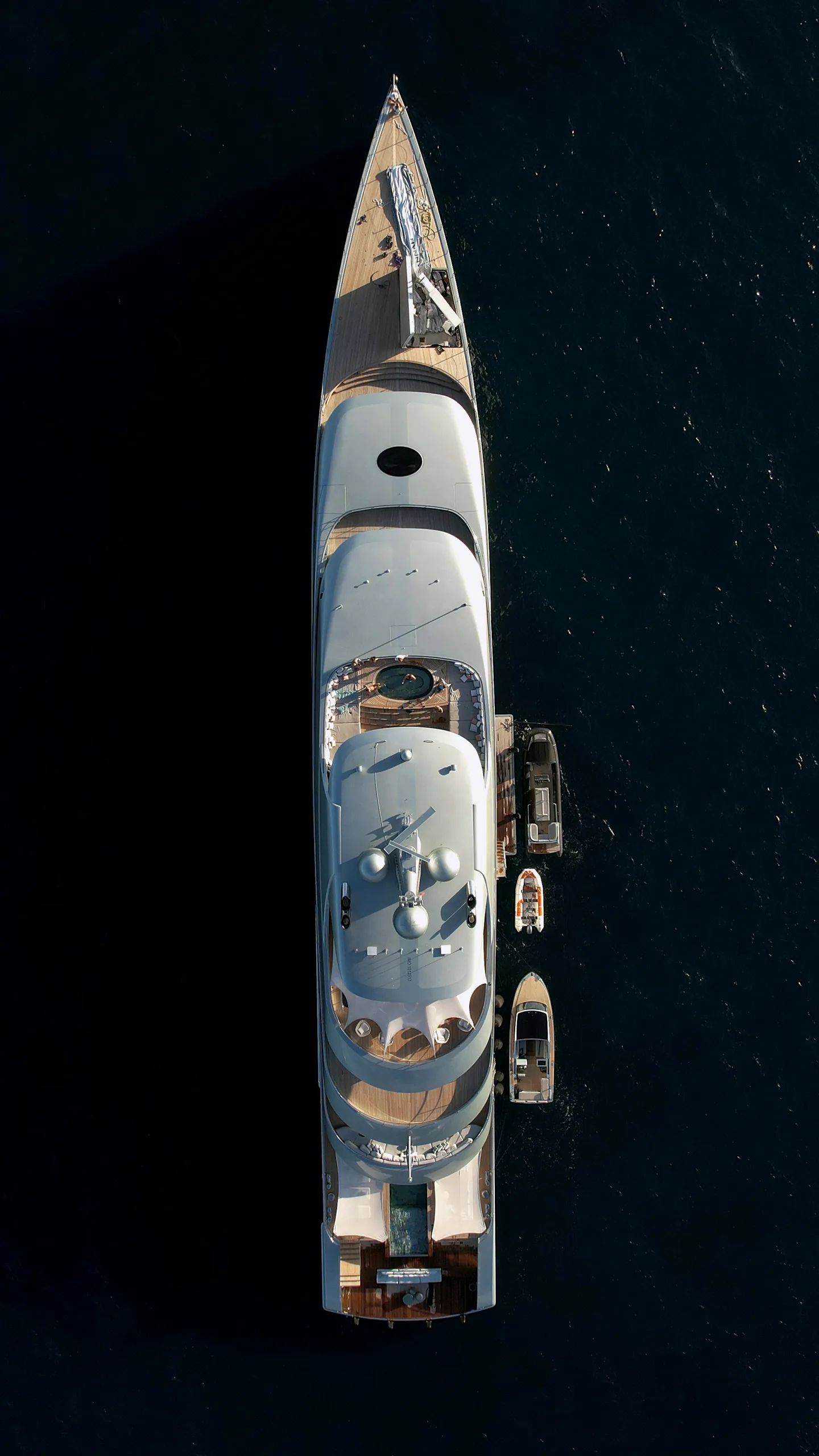
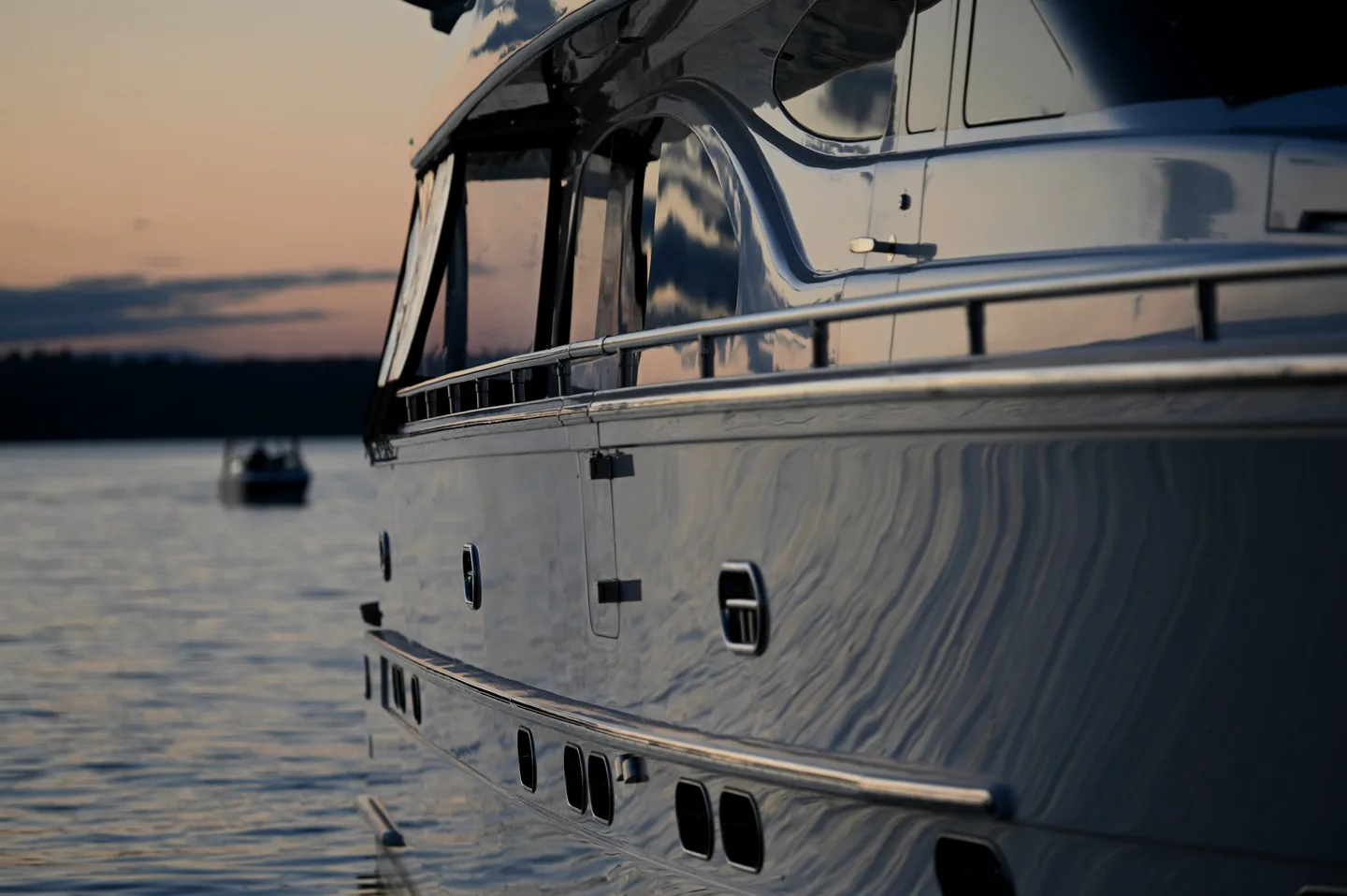
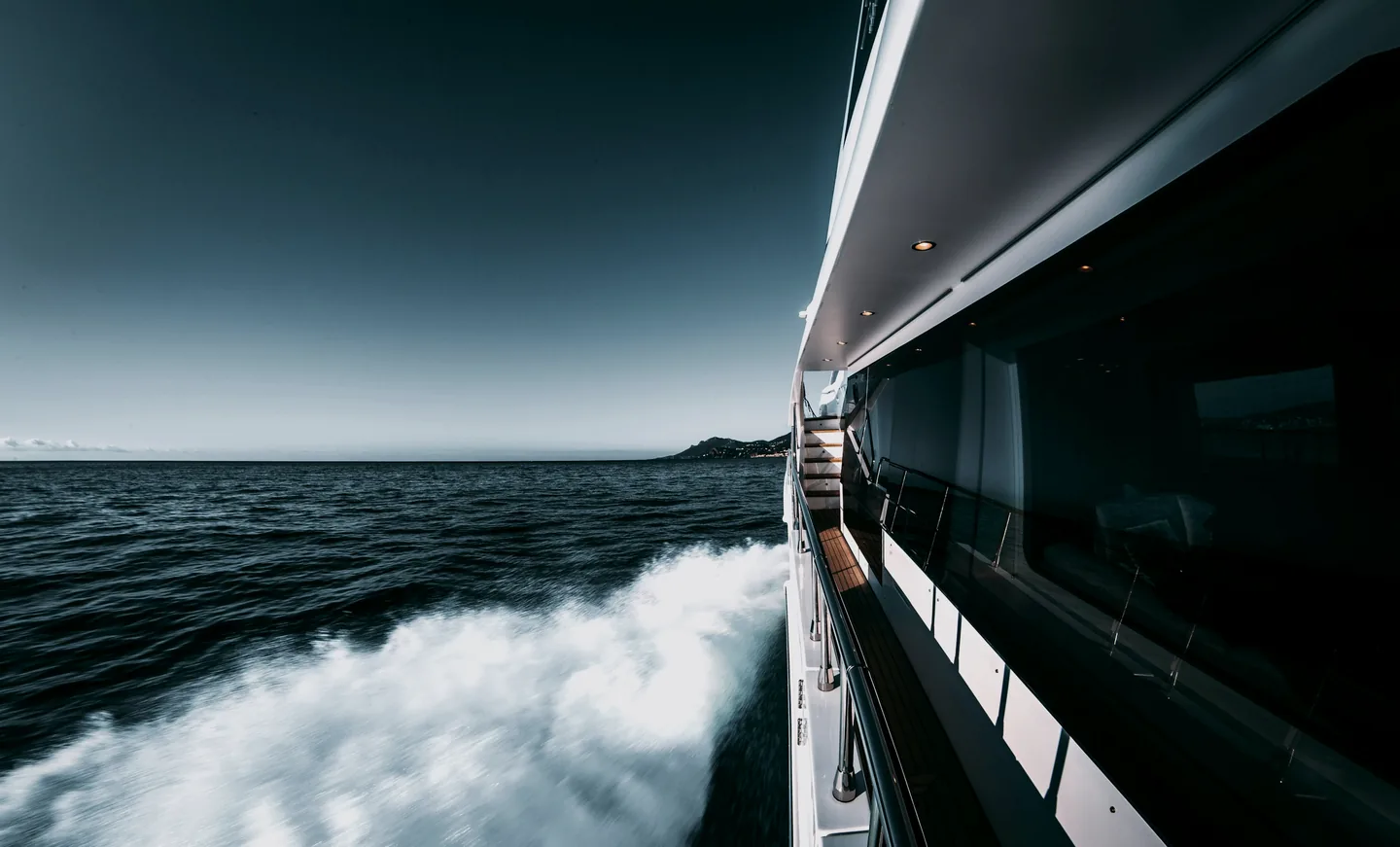
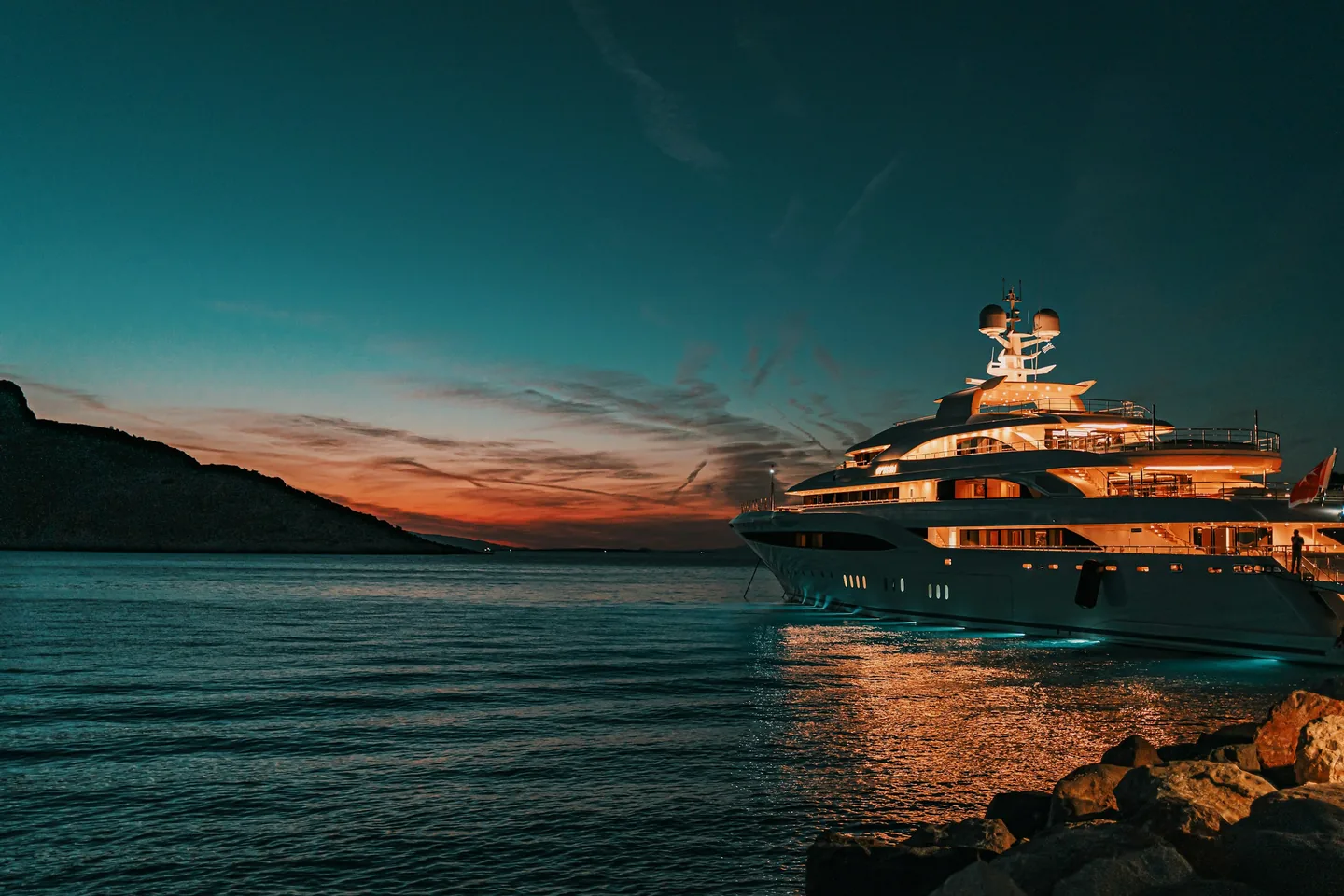
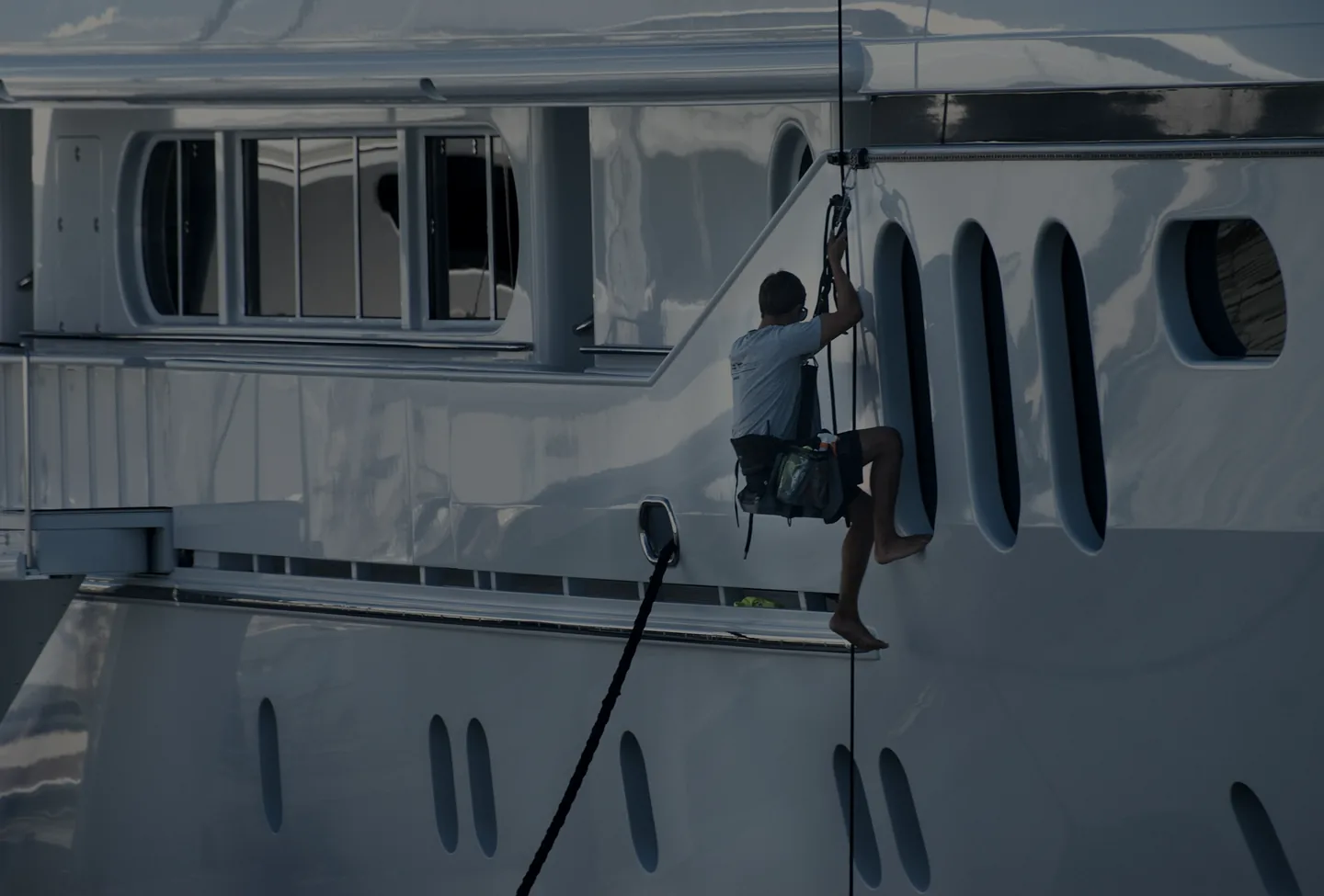
We apply and install film on vessels. Hull colour, gelcoat protection, cabin glass and interior — from one supplier, above the waterline, with the original gelcoat kept underneath.
Clear PPF as a sacrificial layer. Reduces UV chalking and oxidation, and takes dock rash, fender chafe and anchor-chain scuffs. Sells on its own for a boat that doesn't want a colour change.
gloss 97 · ΔE < 1
hydrophobic top-coat > R10 — fewer salt marks
light scuffs self-heal in the sun
rolls up to 183 cm — fewer seams
02Colour
Pick any colour you like
Self-healing TPU colour film. Thicker and far more UV-stable in marine sun than standard cast vinyl. High stretch, so it conforms to compound hull curves. Names, lettering and graphics we print on cast vinyl.
~8 mil vs ~3.5–4 mil for standard vinyl
stretch ≥ 430 % on compound curves
22 wet / 23 dry colours
gloss · satin · matte
03Glass
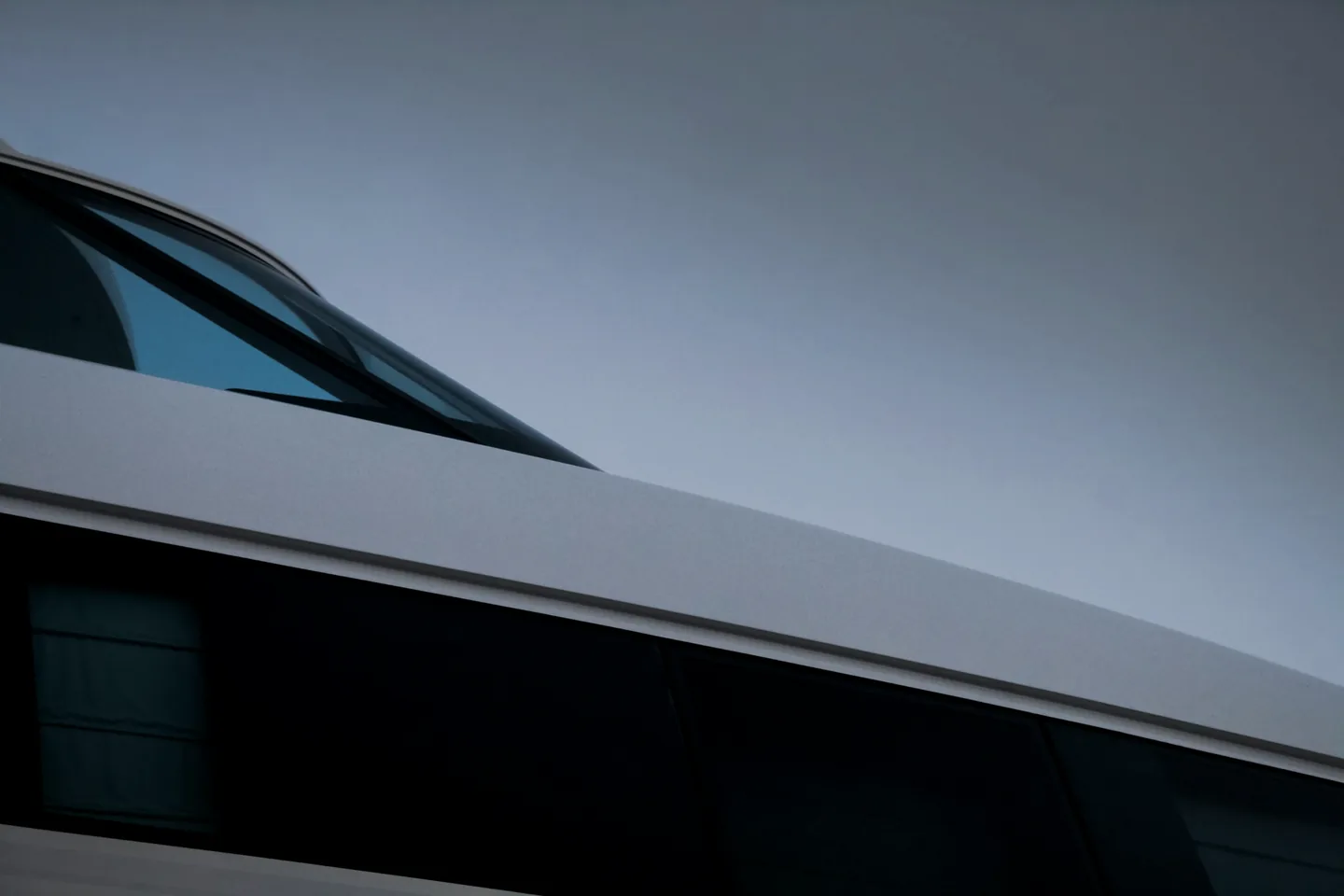
Cabin & windscreen tinting
Nano-ceramic film. Rejects heat and UV — cooler cabin at anchor and less AC load. Slows sun fade on upholstery, timber and the dash.
no mirror look
multiple light-transmission levels
cuts glare at the helm
04Interior
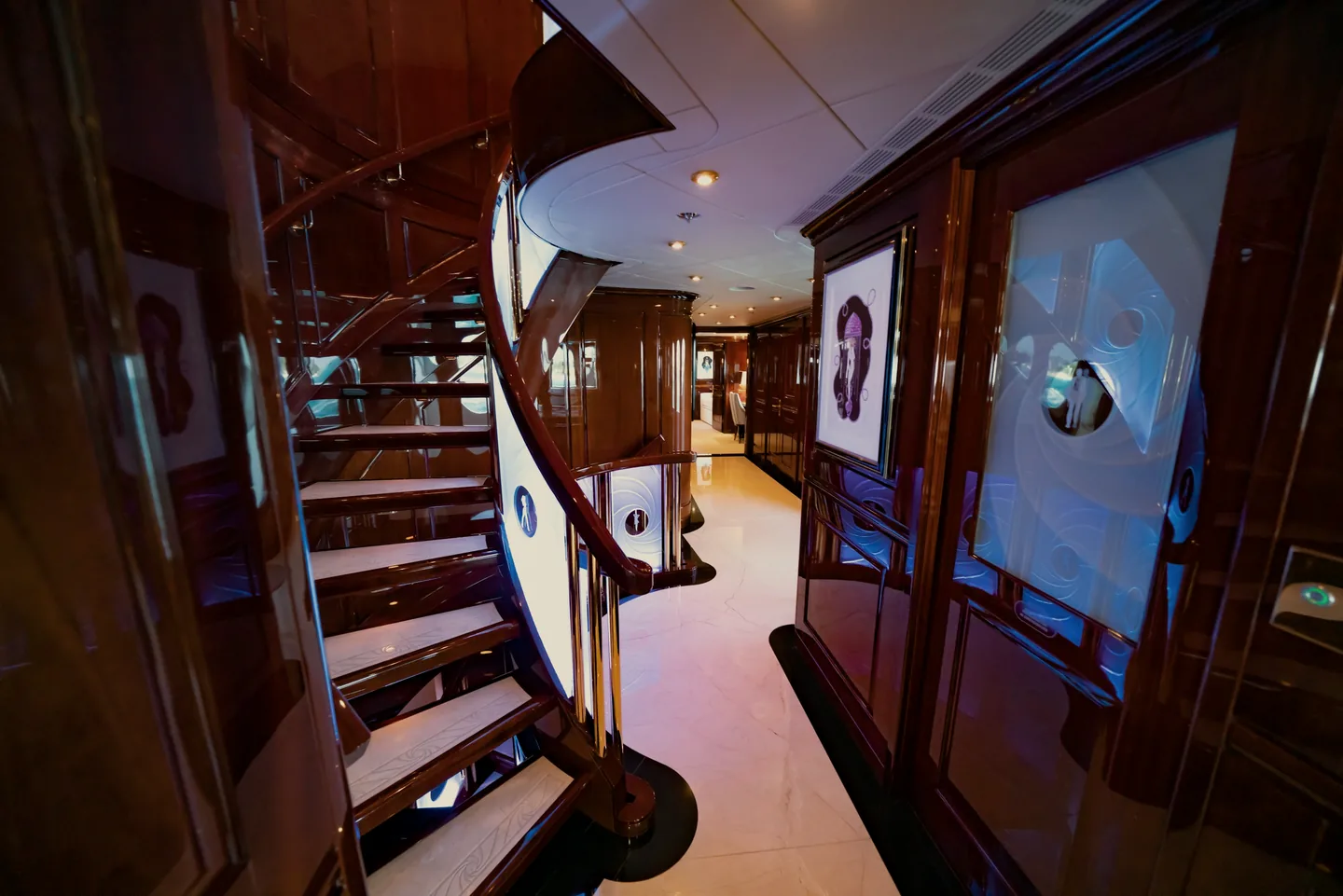
Interior film & refit
SOIF architectural film on bulkheads, joinery, tables and headliners. A refit in days — no rip-out, no weeks in the yard.
6 decor families · wood · metal · stone · marble · fabric · leather
EN 13501 — building fire-reaction class
01
02
03
04
Scroll
Why film
It beats a repaint on three counts.
Cost, turnaround and reversibility. The fourth — colour that also protects the gelcoat — a repaint cannot do at all.
Reversibility
The gelcoat stays underneath
Strip the film any time and the original gelcoat is underneath. A wrapped hull holds resale value — a resprayed one does not.
Turnaround
Days on the hard, not weeks
Film needs no spray booth and no two-part paint cure. The boat sits on the hard for days, not weeks.
Dual function
Colour that also protects
Colour TPU film is a protective layer at the same time. Paint is only colour — and every scratch means a local respray.
Hull material comparison
On the hull
Colour PPF (TPU)
Cast vinyl
2-part PU repaint
Material
TPU polyurethane
cast PVC
PU coating
Body of the layer
~8 mil
~3.5–4 mil
paint film
Light scratches
self-heal with heat
permanent
local respray
Protects gelcoat
colour + protection in one
colour only
—
Reversible
yes
yes
no
Turnaround
days
days
weeks
Material figures are the film manufacturers' data. Turnaround and service life are indicative and vary by vessel, gelcoat condition and exposure.
Process
Four steps, no surprises.
01Step one
Enquiry
Send the boat type, main dimensions and a few photos. We come back with scope and a price range — not a generic rate card.
02Step two
Survey & quote
We look the boat over, measure the surfaces and check the gelcoat. Only then do you get a firm price and a date.
03Step three
Application
On the hard, indoors — not on a cradle in the marina. Every cut and seam near the waterline gets marine edge sealer.
04Step four
Handover
We walk the edges and seams with you. You get care instructions and, up front, the plan for how the film comes off one day.
For yards & fleets
We also work as a subcontractor.
For yards, service centres and charter fleets we do the application as a subcontract — you keep the customer, we bring the material and the crew. Seasonal capacity is planned ahead so there is room at spring haul-out.
We plan capacity ahead and hold agreed dates. The earlier you write, the more slots there are to pick from.
Scope
Single vessels and series — a charter fleet in one unified look, one slot, one account.
Material
We bring the film and the marine edge sealer. You don't stock anything and don't chase lead times.
FAQ
What owners actually ask.
Material
We use only the highest-grade material.
For the hull and glass we source film from the European distributor FSE Supply — colour and clear PPF are manufactured under IATF 16949 and ISO 9001, not anonymous marketplace film, and rolls run up to 183 cm wide, which means fewer seams on topsides and superstructure. For interiors we use SOIF architectural film: six decor families, from solid colours through wood and metal to stone, marble, fabric and leather. Every decor carries a code, so a shade can still be matched and topped up years later.
It depends on exposure, berth and care. Published film warranties are automotive ratings for climate zone 1 (CZ/SK); marine coverage we confirm per application with the manufacturer. We won't promise a number we can't back.
Can the film be removed without damaging the gelcoat?
Yes — that is the main advantage over a repaint. The gelcoat stays under the film. On long-term installs, plan a heat-assisted removal.
Do you do below-waterline antifouling?
No. We work above the waterline — hull, superstructure, glass and interior. Antifouling is a separate specialism we don't offer.
Why do cuts at the waterline have to be sealed?
Without marine edge sealer water wicks under the film and it starts to delaminate. With us the sealing is part of the job, not an extra.
Do scratches heal by themselves?
Light scratches and scuffs do, with heat. A deep gouge from a rope or the dock does not — but the film takes it, not your gelcoat.
Can I change the colour of the whole boat with film?
Yes. Colour TPU film comes in dozens of shades in gloss, satin and matte. Names, lettering and graphics we print on cast vinyl.
How long does the boat stay on the hard?
Days, not weeks. Film needs no spray booth and no two-part paint cure. You get the exact date after the survey.
Does the interior film meet fire regulations?
It carries EN 13501, the European building fire-reaction class. That is not the IMO FTP or MED certification required for commercial and charter interiors — on such a project we verify it separately.
Get a quote
Send the boat type and a few photos.
We come back with scope and a price range. Nobody serious quotes a firm price without surveying the boat — and we won't pretend to.